Section 01Service definition
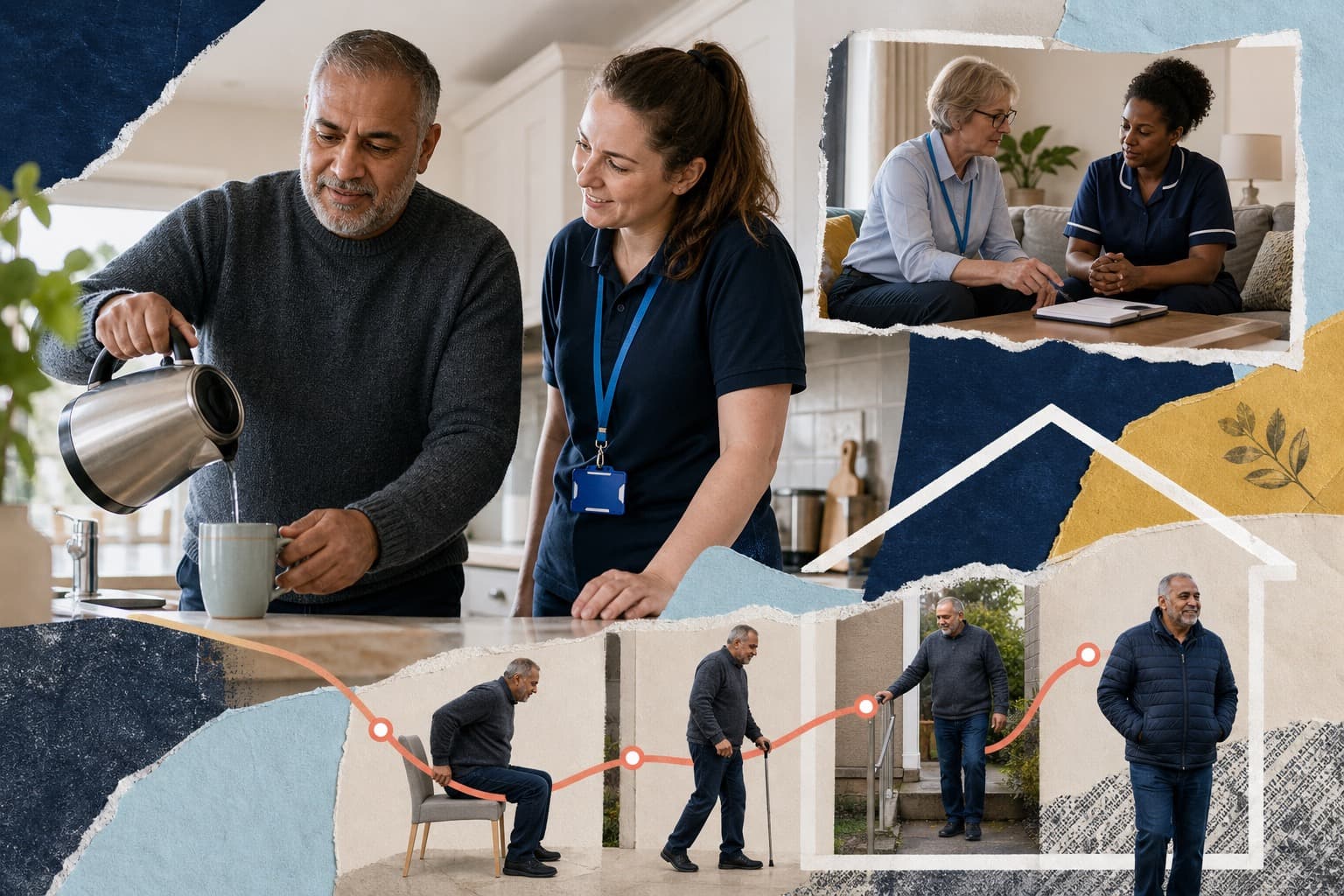
Rehabilitation services provide structured, goal-focused intervention to restore function, independence, and quality of life following illness, injury, or deterioration. Services include intermediate care, community rehabilitation, neurological rehabilitation, stroke rehabilitation, and rehabilitation within residential or nursing settings. The model is outcome-driven, time-limited, and multi-disciplinary.
Section 02Typical client cohort
People recovering from stroke, hip fracture, surgery, acute illness, or neurological event. People with progressive neurological conditions requiring maintenance rehabilitation. People at risk of hospital admission who can benefit from intensive community rehabilitation. Referrals come from hospital discharge teams, GPs, community health teams, and social work.
Section 03Commissioning and procurement context
Rehabilitation services are commissioned by NHS Integrated Care Boards, local authorities, and through joint arrangements. Procurement includes NHS Standard Contract for clinical rehabilitation, framework agreements for community rehabilitation, and integrated commissioning for intermediate care. Hospital discharge pathways and admission avoidance schemes are significant drivers.
Section 04Core service requirements
Specifications require evidence of goal-focused intervention, multi-disciplinary team working, therapy-led assessment and treatment, measurable outcome tracking, step-down planning, and partnership with acute and community health services. Commissioners expect to see how rehabilitation intensity is matched to individual potential and how progress is objectively measured.
Goal-Focused Intervention. Covers how goals are set collaboratively with the individual, how they are measured using standardised tools, and how the rehabilitation programme is structured around goal achievement.
Multi-Disciplinary Rehabilitation. Addresses how physiotherapy, occupational therapy, speech and language therapy, nursing, and care staff work together to deliver a coordinated rehabilitation programme.
Outcome Measurement. Details the tools used to measure functional improvement, including Barthel Index, FIM+FAM, COPM, and condition-specific measures. Covers how data is used to evidence effectiveness.
Step-Down and Discharge Planning. Covers how the service plans for discharge from rehabilitation, including transition to long-term care, domiciliary support, or independent living.
Section 05Regulatory and compliance framework
CQC registration applies where personal care or nursing care is provided. Services must comply with NICE rehabilitation guidelines, NHS commissioning standards, and professional regulatory requirements for therapists and nursing staff. The National Framework for NHS Continuing Healthcare intersects with rehabilitation where individuals are assessed for ongoing needs.
Section 06Key operational challenges
Staffing includes registered therapists (physiotherapy, occupational therapy, speech and language therapy), rehabilitation assistants, nursing staff, and care staff. Supervision and competency assessment are central to quality.
Providers fail when responses lack therapy-led content, demonstrate weak outcome measurement, omit multi-disciplinary detail, or treat rehabilitation as extended care rather than goal-focused intervention.
Section 07How we approach this setting
We write rehabilitation responses around clinical outcomes and functional improvement, embedding specific assessment tools, therapy modalities, and outcome measures. Responses demonstrate how the service achieves measurable progress within defined timeframes and how step-down is planned from the outset.
Section 08Typical starting points we handle
First-time bidders entering this setting, scaling providers expanding across districts, established providers seeking score improvement, and providers building the evidence base required for competitive frameworks.
Section 09Outcomes achieved
KPIs include functional improvement scores, goal achievement rates, average length of rehabilitation episode, discharge destinations, readmission rates, and patient experience measures.
Starting point → Outcome
Section 10Related case examples
The case studies below match this care setting and demonstrate the operational evidence base behind successful submissions.
Section 12Where this applies
Partners include hospital discharge teams, community health services, GPs, social care, equipment services, and voluntary sector organisations supporting long-term condition management.